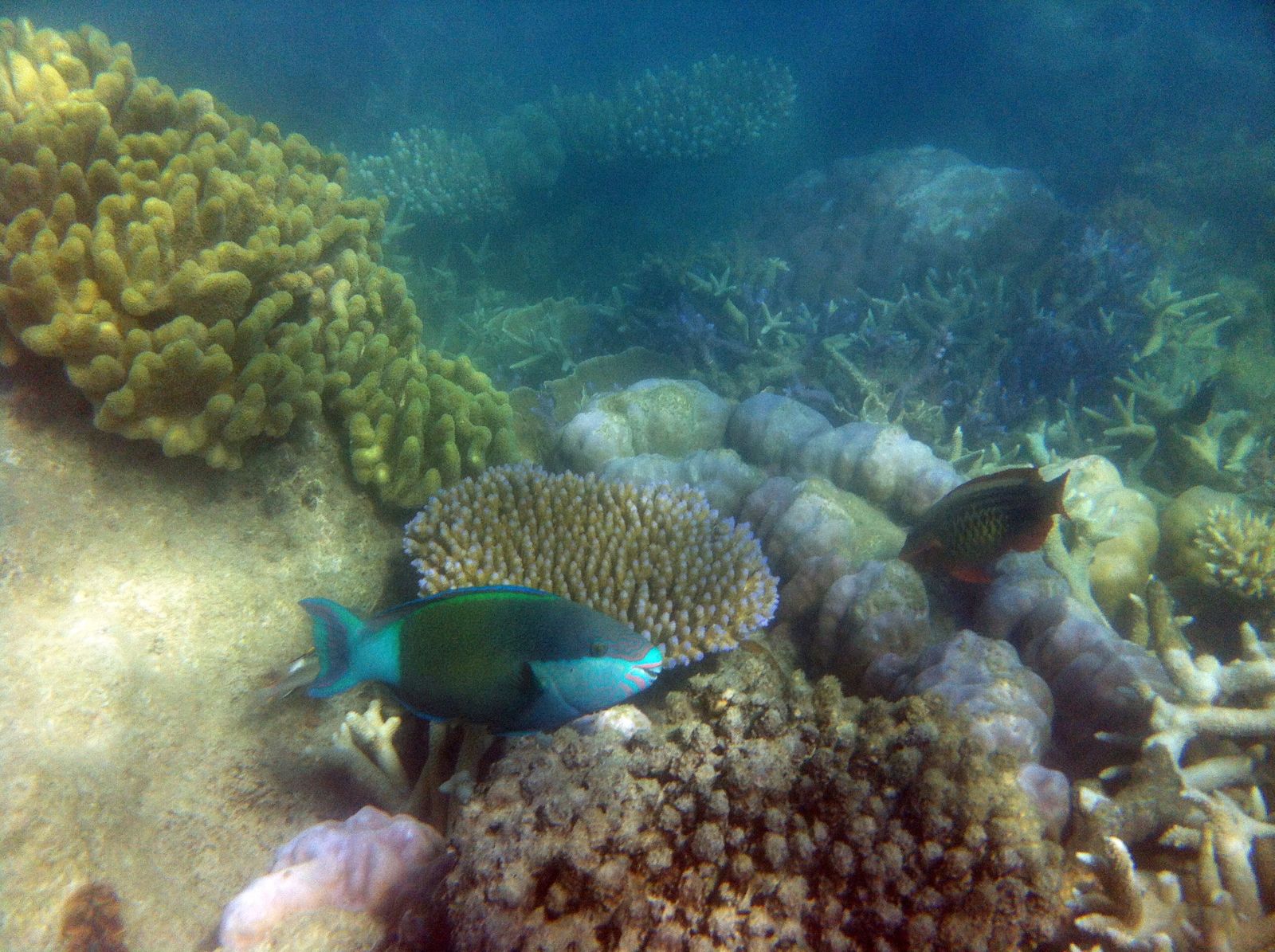
The Pinnacles on Hook Island is one of the Whitsundays' premier snorkelling sites, where enormous coral bommies rise almost to the surface just off the western beach. The staghorn coral cover here is nearly solid, creating a dense, vibrant underwater garden that rivals outer Great Barrier Reef sites. Large coral pinnacles — the site's namesake — tower up from the sandy floor, funneling schools of colourful reef fish around snorkelers. Manta rays are frequent visitors during the cooler months, gliding gracefully through the clear waters. The sheltered position inside Hook Island's fringing reef means calm conditions most of the year, making this an unforgettable spot for snorkelers seeking spectacular hard coral formations and abundant marine life without the long boat ride to the outer reef.
The Pinnacles, Hook Island
Fair. Experienced snorkellers only.
Showing last known conditions
Last evaluated
DANGER: Explicit Risks Present
The Pinnacles, Hook Island has hazards marked as danger. Entering the water here means you may face serious risks to your personal safety.
- Deep water drop-off danger
The Cathedral features a substantial wall drop-off into deep water (exceeding 1 km). Snorkelers must stay aware of their position relative to the wall and avoid drifting over the drop-off.
The spot
Community-maintained
Community contribution: submitted by Daniel
Know before you go
Logged by the community, confirmed by mods
High risk: Deep water drop-off
The Cathedral features a substantial wall drop-off into deep water (exceeding 1 km). Snorkelers must stay aware of their position relative to the wall and avoid drifting over the drop-off.
Moderate risk: Tidal currents
Strong tidal currents can develop rapidly, especially in Wrasse Bay and exposed areas. Only snorkel at slack tide or calm conditions.
Moderate risk: Northerly wind exposure (Mantaray Bay)
Mantaray Bay is fully exposed to northerly winds. Avoid completely if any northerly breeze is present.
Moderate risk: Unpredictable swell (Wrasse Bay)
Swell can roll in unexpectedly at Wrasse Bay due to its exposed north-easterly aspect. Only visit in flat conditions.
Moderate risk: Exposed Northern Swell
The northeastern side of Hook Island is exposed to open ocean swell. Conditions can change rapidly, with swell rolling in unexpectedly, making this site unsuitable in any northerly breeze.
Moderate risk: Strong Tidal Currents
The area around Pinnacle Point and Wrasse Bay experiences strong tidal currents that can be severe, particularly at mid-tide. Best visited at the bottom of low tide in flat conditions.
Moderate risk: Stingers (Jellyfish)
Stinging jellyfish (box jellyfish / Irukandji) can be present in Whitsundays waters during the warmer months.
Moderate risk: Swell and wind chop
The Woodpile is a wall dive site best visited in calm conditions. Swells and wind chop can create strong surge and reduce visibility, making snorkeling hazardous.
Moderate risk: Remote location — limited emergency access
Located in a remote area of Hook Island accessible only by boat. Emergency services are far away and medical evacuation would be delayed.
Moderate risk: Northerly Wind Exposure
Stonehaven is exposed to northerly winds. If any northerly breeze picks up, the bay becomes choppy and unsafe for snorkelling.
Moderate risk: Stinging Marine Life
Stinging jellyfish (including box jellyfish) may be present in warmer months, particularly November to March.
Moderate risk: Exposure to wind and swell
The site is exposed to northerly winds and can also be affected by swell from strong south-easterlies. Only suitable in flat, calm conditions.
Moderate risk: Marine stingers (Oct–May)
Marine stingers (box jellyfish and Irukandji) are present in Whitsunday waters during the warmer months.
Moderate risk: Stinger season
Stinging jellyfish (including box jellyfish) are present in Whitsunday waters during the warmer months. Wear a stinger suit.
Moderate risk: Open ocean swell and wind exposure
The site is exposed to prevailing winds and ocean swell. Sudden increases in wave height can make snorkeling conditions challenging, particularly when northerly winds pick up.
Moderate risk: Strong currents
Strong currents can develop around the northern point of Hook Island. Best dived during calm weather and neap tides.
Moderate risk: Northerly wind exposure
Horseshoe Bay is exposed to northerly winds. If even a slight northerly breeze develops, conditions become choppy and unsafe for snorkelling. Best visited in calm conditions or during southeast trade wind season.
Low risk: Shallow coral and reef hazards
Shallow reef and coral bommies exist near moorings and shore. Care needed to avoid damaging coral or injuring yourself.
Low risk: Sharp coral beaches
Beaches at Mantaray Bay and Wrasse Bay are composed of sharp broken coral — footwear recommended for beach entry.
Low risk: Shallow Mooring Hazard
Moorings near the reef are designed for vessels under 7 metres with shallow draft. Using them at low tide can damage boats and the reef below.
Low risk: Manta Ray Encounters
During the cooler months (May–October), manta rays are frequently sighted feeding at the surface. While generally harmless, snorkelers should give them respectful space.
Low risk: Shallow Coral Bommies
Staghorn coral bommies rise very close to the surface. Snorkelers can be scraped or cut by sharp coral if they swim too close or are pushed by swell.
Low risk: Outgoing tide current
Tidal currents can sweep around the northern end of Hook Island, particularly during outgoing tides, requiring moderate fitness to swim against.
Low risk: Marine stingers (box jellyfish)
Marine stingers (box jellyfish) are present in Whitsundays waters during the warmer months.
Low risk: Sharp Coral Beach Entry
The beach is composed of broken coral rubble that can be sharp and uncomfortable underfoot. Reef shoes are strongly recommended.
Low risk: Boat Traffic & Mooring Lines
Vessels and mooring lines — the bay is a busy anchorage. Stay aware of boat traffic, mooring pendants, and anchor chains near the snorkel zone.
Low risk: Exposure to northerly swell
Cockatoo Point is exposed to northerly winds and swell. Avoid in breezy conditions or when a northerly wind is forecast.
Low risk: Boat traffic
Boat traffic from tour vessels and private yachts anchoring or mooring nearby. Stay aware of vessel movements.
Low risk: Southeast Trade Winds
Southeast trade winds (April–October) can make the passage to the bay choppy and uncomfortable. The bay itself is sheltered, but the crossing from Airlie Beach requires good sea conditions.
Low risk: Tidal Currents & Turbidity
Tidal flows through Whitsunday passages can reduce visibility (5–12 m typical) and create unexpected currents around the point of the bay.
Low risk: Marine stingers (jellyfish)
Seasonal stingers (marine stingers) are present in Whitsunday waters, particularly during the warmer months from November to May.
Low risk: Sharp coral and shallow reef
Sharp coral rubble and bommies near the shore. Beach access is over broken coral that can be sharp underfoot.
Low risk: Shallow reef flat at low tide
The reef flat can be very shallow at low tide, making boat access impossible and snorkelling restricted to deeper channels. Snorkelers risk scraping against coral.
Low risk: Remote location — no facilities
The beach is remote with no phone reception, fresh water, or emergency services. Self-sufficiency is essential.
Low risk: Northerly wind chop
Caves Cove is partially exposed to northerly winds. A northerly breeze can create choppy surface conditions and reduced visibility.
Low risk: Limited mooring access
Limited mooring availability and no anchoring in the green zone. Boats must use designated moorings which have a 2-hour time limit, making it difficult to stay for extended periods.
Low risk: Shallow reef at low tide
The site is quite shallow over the reef top at low tide, making snorkeling difficult. High tide is recommended for safe snorkeling.
Low risk: Exposed ocean conditions
Open ocean exposure at the northern end of Hook Island; wind and swell can create rough conditions quickly.
Low risk: Marine stingers
Stinger season in tropical Queensland waters. Box jellyfish and Irukandji may be present.
Low risk: Deep drop-offs
The site features deep drop-offs from 7 to 15 metres. Snorkellers must be comfortable with sudden depth changes and strong buoyancy control.
Low risk: Swell exposure
Swell can roll in unexpectedly from the Coral Sea due to the exposed northeastern aspect of Hook Island.
Wildlife Guide
No wildlife notes for this spot yet.
Gallery
3 photos from the community
Getting in
Accessible only by boat — located on the western side of Hook Island in the Whitsundays. Most visitors reach The Pinnacles via day tour or private charter from Airlie Beach, Hamilton Island, or Shute Harbour. It is a day-use only spot with no overnight mooring.
No parking at the spot itself. Park at Shute Harbour or Abel Point Marina (Airlie Beach) if arriving by private vessel. Day tours include return transfers from tour operator meeting points in Airlie Beach or Hamilton Island marina.
Spot Map
Community
Trust
Is this spot real, accurate, still loved?
Spots near Queensland
No nearby spots yet.
Quick verify
One tap helps the community keep this spot honest.
About this data
- Conditions last evaluated
- Spot data last updated
- Data sources
- Open-Meteo (marine & weather conditions), tide predictions via UTide, community contributors (descriptions, hazards, marine life).
- License
- Spot content licensed under CC BY-SA 4.0. How's the Spot is open source.