Ladies Reef is a small, bommie-like reef about 30m long and 10m wide, located roughly 200m off Main Beach in South West Rocks, straight out from the headland east of Horseshoe Bay. This sheltered shore-dive site is perfect in southerly winds, offering a surprisingly rich ecosystem of soft and hard corals, sponges, and macro life. The route passes Stingray Rock (home to a resident bullray), then crosses sandy seabed to reach the reef at around 10m depth. Famous for its prolific fish life — schools of bream, yellowtail, silver sweep, trevally, luderick, tiny red morwong, eagle rays, flathead, decorator crabs, and nudibranchs — this compact reef packs a punch and also makes an excellent night dive.
The Boulders (South West Rocks)
BeginnerMAYBE
MAYBE
Fair. Experienced snorkellers only.
Showing last known conditions
Wave Height 0.6 mSwell Period 7.3 sWind Speed 13 knPrecipitation 0.0 mmTidal Phase flood
Last evaluated
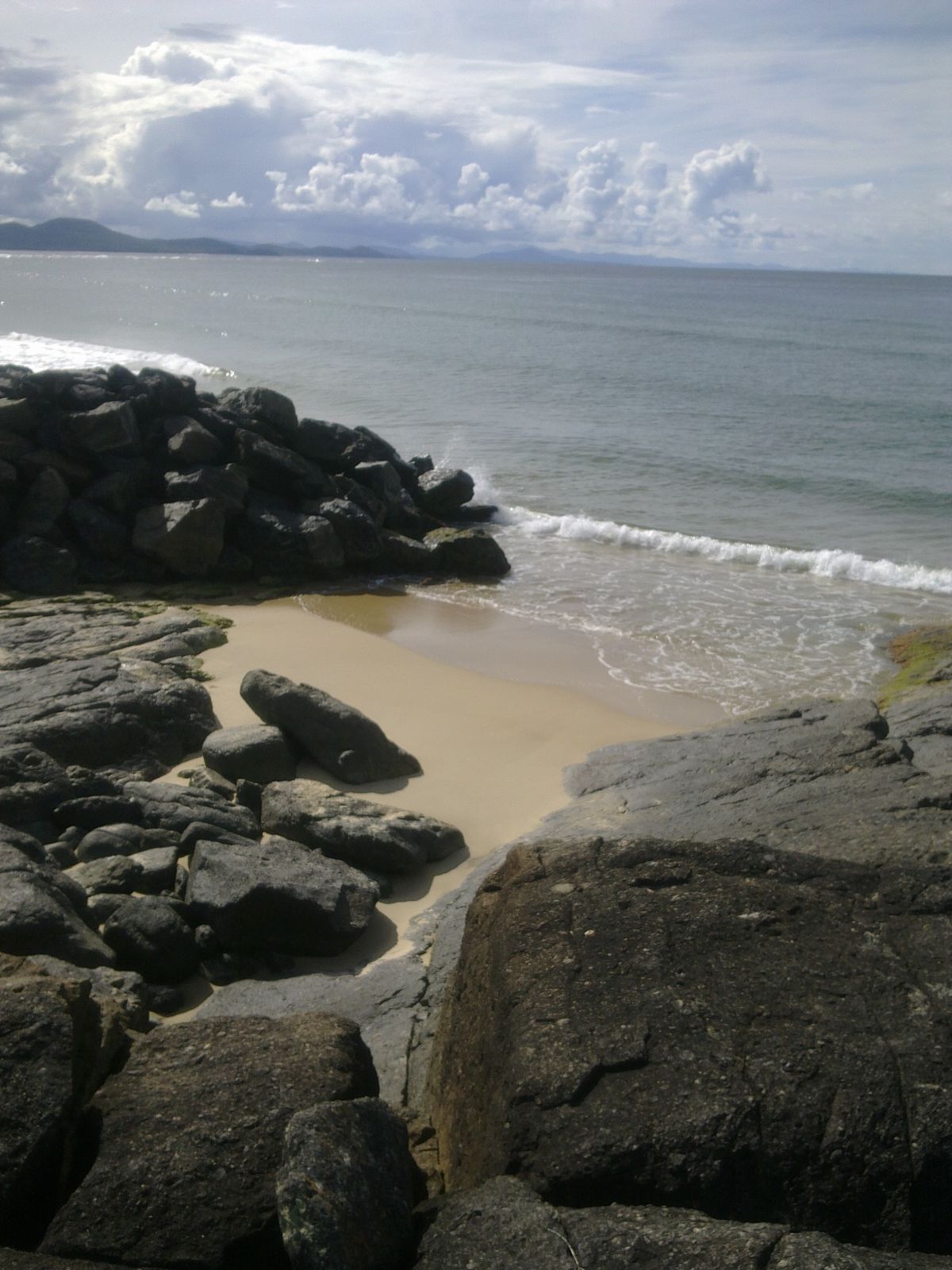
The spot
Community-maintained
Community contribution: submitted by Daniel
Know before you go
Logged by the community, confirmed by mods
Moderate risk: Surf break and rips
Main Beach is an ocean beach subject to waves and rip currents, especially on larger swell days. Snorkel only in calm conditions and between the flagged patrolled area.
Moderate risk: Swell Exposure
Green Island is exposed to wind and swell from multiple directions, more so than nearby Fish Rock. Big seas can significantly reduce visibility and make entry/exit challenging.
Moderate risk: Ocean Currents
The East Australian Current can produce moderate to strong currents around the island, particularly on the eastern side. Drift diving techniques are recommended.
Moderate risk: Steep shore access
The island has no easy shore entry; access is via boat or steep terrain only.
Moderate risk: Swell exposure
The shallow reef system is only accessible in suitable calm conditions; swells can create dangerous surf over the reef top.
Moderate risk: Strong currents
Ocean currents can pick up around the reef, particularly on an outgoing tide, affecting swimmers and snorkellers.
Low risk: Strong outgoing tide (Korogoro Creek)
At the northern end where Korogoro Creek enters the ocean, the outgoing tide can create a strong current that may sweep swimmers and snorkellers offshore.
Low risk: Marine stingers
Bluebottles (Portuguese man o' war) can drift onto the beach, particularly during northerly winds and warmer months, causing painful stings.
Low risk: Surge in Shallow Reef
The shallow northern reef area (10-15 m) can experience surge in choppy conditions, pushing divers toward rocks.
Low risk: Grey Nurse Shark Aggregation
Green Island is a key aggregation site for grey nurse sharks (critically endangered). While generally docile, divers should maintain respectful distance and avoid cornering them against the reef.
Low risk: Low tide shallow rocks
The boulder formations can be very shallow at low tide, with sharp edges that may cause cuts and scrapes.
Low risk: Slippery algae-covered rocks
Granite boulders near the waterline develop slippery algae, making footing treacherous when walking in or out of the water.
Low risk: Bluebottle jellyfish
Bluebottles (Physalia physalis) can drift into the bay during northeasterly winds, typically in summer months (December to March).
Low risk: Strong ocean currents
Drift diving is common here; currents can run around the island, especially on the northern and eastern sides.
Low risk: Boat traffic
The channel between Green Island and the mainland is used by dive boats transiting to/from Fish Rock.
Low risk: Variable visibility
Visibility averages 15 m but can drop significantly after big seas due to the shallow reef depth.
Low risk: Ocean currents
Mild currents can flow around the reef, particularly on the western side.
Low risk: Sharp reef structure
Rocky reef bottom with potential sharp coral and rock ledges — protective footwear and buoyancy control advised.
Low risk: Surf conditions at Main Beach entry
Entry requires calm surf. If waves are too large on Main Beach, the dive is not advisable.
Low risk: Navigation — locating the reef
Ladies Reef is a small, low-profile reef that rises only 2m from the sand. Snorkelers must navigate accurately from Stingray Rock (approx 100m north) and may miss it without careful orientation.
Low risk: Depth range
Depth reaches up to 11m around the reef, which may be challenging for weaker or less confident snorkelers.
Low risk: Currents
Occasional currents can sweep around the headland at Horseshoe Bay, particularly during tidal changes.
Wildlife Guide
No wildlife notes for this spot yet.
Gallery
6 photos from the community
Getting in
Shore entry
Entry
From the centre of South West Rocks, head towards Front Beach / Livingstone Street. The Boulders are located at the southern end of Front Beach, adjacent to the Surf Life Saving Club carpark and near the Trial Bay Gaol entrance.
Parking & facilities
Free parking available at the South West Rocks Surf Life Saving Club carpark on Livingstone Street, or at the Trial Bay Gaol carpark just a short walk away.
toiletsparkingshowerspicnic_tables
No fees for beach access. Parking is free.
Spot Map
Community
Gallery ┬╖ 6 photos
Trust
Is this spot real, accurate, still loved?
Spots near New South Wales

No nearby spots yet.
Needs verification
Quick verify
One tap helps the community keep this spot honest.
About this data
- Conditions last evaluated
- Spot data last updated
- Data sources
- Open-Meteo (marine & weather conditions), tide predictions via UTide, community contributors (descriptions, hazards, marine life).
- License
- Spot content licensed under CC BY-SA 4.0. How's the Spot is open source.
Weather & swell ┬╖ Open-Meteo marine & weather APIs Tides ┬╖ UTide harmonic analysis Sea & safety ┬╖ community reports