Along the dramatic Bunda Cliffs where the vast Nullarbor karst plateau meets the Southern Ocean, this remote coastal access point offers entry into the turquoise waters of the Far West Coast Marine Park. The towering 60–120 m limestone cliffs create a stunning backdrop for snorkeling in the wild Great Australian Bight, where the cold, nutrient-rich upwellings support a remarkable marine ecosystem. This is one of the few places along the world's longest line of sea cliffs where swimmers can access the ocean, though conditions are demanding and only for the experienced.
Nullarbor National Park (coastal access beach)
AdvancedMAYBE
MAYBE
Fair. Experienced snorkellers only.
Showing last known conditions
Wave Height 0.0 mSwell Period 0.0 sWind Speed 4.1 knPrecipitation 2.7 mmTidal Phase ebb
Last evaluated
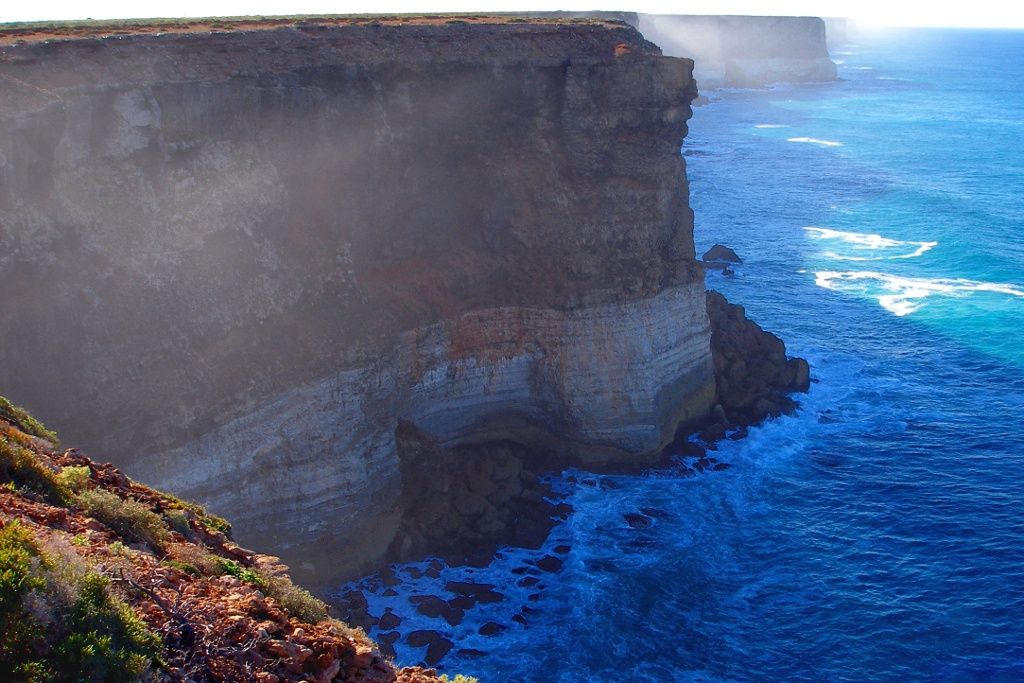 © Brian W. Schaller
DANGER: Explicit Risks Present
Nullarbor National Park (coastal access beach) has hazards marked as danger. Entering the water here means you may face serious risks to your personal safety.
- Unstable cliff edges danger
The Bunda Cliffs are constantly collapsing into the ocean. Stay well back from edges and do not approach cliff faces near access points.
- Strong ocean currents and swell danger
The Great Australian Bight experiences powerful swells, rip currents, and surf conditions from the Southern Ocean.
- Remote isolation danger
Extreme remoteness with no cell reception, no lifeguards, and emergency services hours away. Any incident becomes serious.
The spot
Community-maintained
Community contribution: submitted by Daniel
Know before you go
Logged by the community, confirmed by mods
High risk: Unstable cliff edges
The Bunda Cliffs are constantly collapsing into the ocean. Stay well back from edges and do not approach cliff faces near access points.
High risk: Strong ocean currents and swell
The Great Australian Bight experiences powerful swells, rip currents, and surf conditions from the Southern Ocean.
High risk: Remote isolation
Extreme remoteness with no cell reception, no lifeguards, and emergency services hours away. Any incident becomes serious.
Moderate risk: Cold water temperatures
Southern Ocean water temperatures rarely exceed 15°C even in summer, increasing risk of hypothermia.
Moderate risk: Great white shark presence
The Bight is known white shark habitat. Seals and whale carcasses attract them close to shore.
Wildlife Guide
No wildlife notes for this spot yet.
Gallery
1 photo from the community
Getting in
Shore entry
Entry
Access via Eyre Highway (300 km west of Ceduna). The coastal access beach is reached via one of the three signposted Bunda Cliff lookouts. Turn south off the highway onto the unsealed access track at the designated lookout point. A 4WD vehicle is strongly recommended for the track down to the beach.
Parking & facilities
Limited gravel parking at the Bunda Cliff lookout pull-offs along the Eyre Highway. No designated parking lot for beach access.
toilets
No entry fee for the National Park. Head of Bight Visitors Centre (east of the park) has a separate admission fee.
Spot Map
Community
Gallery ┬╖ 1 photos
Trust
Is this spot real, accurate, still loved?
Spots near South Australia

No nearby spots yet.
Needs verification
Quick verify
One tap helps the community keep this spot honest.
About this data
- Conditions last evaluated
- Spot data last updated
- Data sources
- Open-Meteo (marine & weather conditions), tide predictions via UTide, community contributors (descriptions, hazards, marine life).
- License
- Spot content licensed under CC BY-SA 4.0. How's the Spot is open source.
Weather & swell ┬╖ Open-Meteo marine & weather APIs Tides ┬╖ UTide harmonic analysis Sea & safety ┬╖ community reports