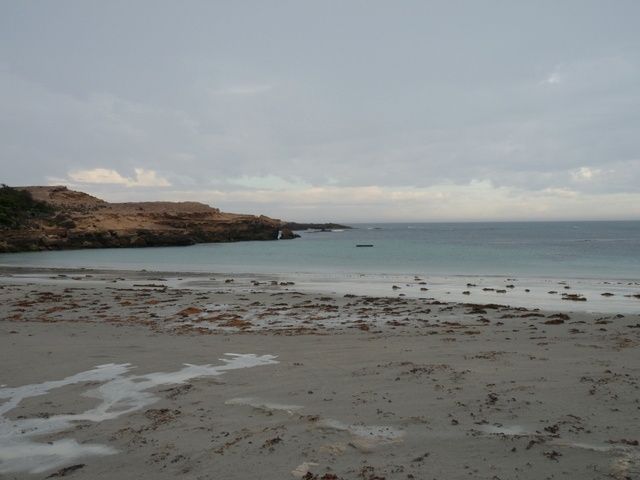
Lighthouse Bay hugs the wild Limestone Coast near Carpenter Rocks, South Australia, where dramatic limestone cliffs and crystal-clear turquoise waters meet. This secluded rocky bay sits below the historic Cape Banks Lighthouse and offers exceptional snorkeling over shallow limestone reefs teeming with life. The nearby wreck of the Pisces Star (a 60-ft yacht wrecked in 1997) sits within the tidal zone and has become a popular dive site, while the bay's sheltered pockets of clear water reveal colourful reef fish, crayfish, and abundant marine growth. The raw coastal scenery, with its sculpted rock platforms, soft sandy pockets, and sweeping ocean views, makes this a captivating off-the-beaten-path snorkeling destination.
Lighthouse Bay (near Carpenter Rocks)
IntermediateSKIP
SKIP
Poor conditions. Stay out today.
Showing last known conditions
Wave Height 3.2 mSwell Period 10 sWind Speed 11 knPrecipitation 6.1 mmTidal Phase slack
Last evaluated
 © Fairv8
DANGER: Explicit Risks Present
Lighthouse Bay (near Carpenter Rocks) has hazards marked as danger. Entering the water here means you may face serious risks to your personal safety.
- Southern Ocean swell danger
Powerful and unpredictable swell from the Southern Ocean creates dangerous conditions, strong surge, and dumpers over reef platforms.
- Shipwreck debris (Pisces Star) danger
The rusting wreck of the Pisces Star sits in the tidal zone with sharp metal edges and entanglement hazards. Exercise extreme caution if snorkeling near the wreck.
- Southern Ocean Swell danger
Large, powerful swells from the Southern Ocean roll in year-round, creating strong surge zones and unpredictable wave action along the exposed reefs.
The spot
Community-maintained
Community contribution: submitted by Daniel
Know before you go
Logged by the community, confirmed by mods
High risk: Southern Ocean swell
Powerful and unpredictable swell from the Southern Ocean creates dangerous conditions, strong surge, and dumpers over reef platforms.
High risk: Shipwreck debris (Pisces Star)
The rusting wreck of the Pisces Star sits in the tidal zone with sharp metal edges and entanglement hazards. Exercise extreme caution if snorkeling near the wreck.
High risk: Southern Ocean Swell
Large, powerful swells from the Southern Ocean roll in year-round, creating strong surge zones and unpredictable wave action along the exposed reefs.
Moderate risk: Strong rips and currents
Rip currents can form along the exposed rocky coastline, especially with incoming swell, making shore entry and exit hazardous.
Moderate risk: Treacherous surf and swell
The Limestone Coast can experience strong ocean swells and pounding surf, especially during southerly winds. Conditions can change rapidly, making entry and exit hazardous.
Moderate risk: Unpatrolled beach
No lifeguard patrols or safety services are present. Snorkelers must be self-reliant and assess conditions carefully before entering the water.
Moderate risk: Swell and surf exposure
Lighthouse Bay faces the Southern Ocean and can experience sudden large swells and dumping waves, especially in winter.
Moderate risk: Strong currents and rip tides
The exposed position can generate strong alongshore currents and rip flows, particularly on a dropping tide.
Moderate risk: Strong Rips and Surge
Deep gutters and channels between sandstone reefs generate powerful rip currents and surging water movement, especially during larger swell periods.
Moderate risk: Remote Location
Limited mobile reception and significant distance from emergency services; any incident requires self-rescue or lengthy travel to Mount Gambier.
Low risk: Sharp reef and rock ledges
The limestone reef platforms and boulders are razor-sharp in places; cuts and scrapes are common when entering or exiting the water.
Low risk: Cold water temperatures
Southern Ocean water temperatures are cold year-round (12-17°C), increasing risk of hypothermia without proper wetsuit protection.
Low risk: Low tide rocky reef exposure
Extensive limestone reef platforms are very shallow or exposed at low tide, posing a risk of cuts and abrasions. Best snorkeled on a rising tide.
Low risk: Rocky entry and submerged boulders
Entry is over a rocky limestone shelf with slippery, uneven terrain and submerged boulders that pose a tripping and scraping hazard.
Low risk: Changing Tides
Tidal movements through narrow reef channels can quickly alter water depth and current strength, cutting off exit points at low tide.
Low risk: Cold Water Temperatures
Southern Ocean waters remain cold year-round (10–16°C), increasing risk of hypothermia without adequate wetsuit protection.
Wildlife Guide
No wildlife notes for this spot yet.
Gallery
5 photos from the community
Getting in
Shore entry
Entry
From Carpenter Rocks village, follow Hercules Street to its end where a parking area provides access to the coastal trail heading toward Cape Banks Lighthouse. Lighthouse Bay is accessible via this walking trail along the rugged limestone coastline.
Parking & facilities
Parking area at the end of Hercules Street in Carpenter Rocks, near the trailhead. No formal carpark at the bay itself.
parkingtoilets
No entry fees for the bay, though a permit may be required for vehicles accessing Canunda National Park areas.
Spot Map
Community
Gallery ┬╖ 5 photos
Trust
Is this spot real, accurate, still loved?
Spots near South Australia

No nearby spots yet.
Needs verification
Quick verify
One tap helps the community keep this spot honest.
About this data
- Conditions last evaluated
- Spot data last updated
- Data sources
- Open-Meteo (marine & weather conditions), tide predictions via UTide, community contributors (descriptions, hazards, marine life).
- License
- Spot content licensed under CC BY-SA 4.0. How's the Spot is open source.
Weather & swell ┬╖ Open-Meteo marine & weather APIs Tides ┬╖ UTide harmonic analysis Sea & safety ┬╖ community reports