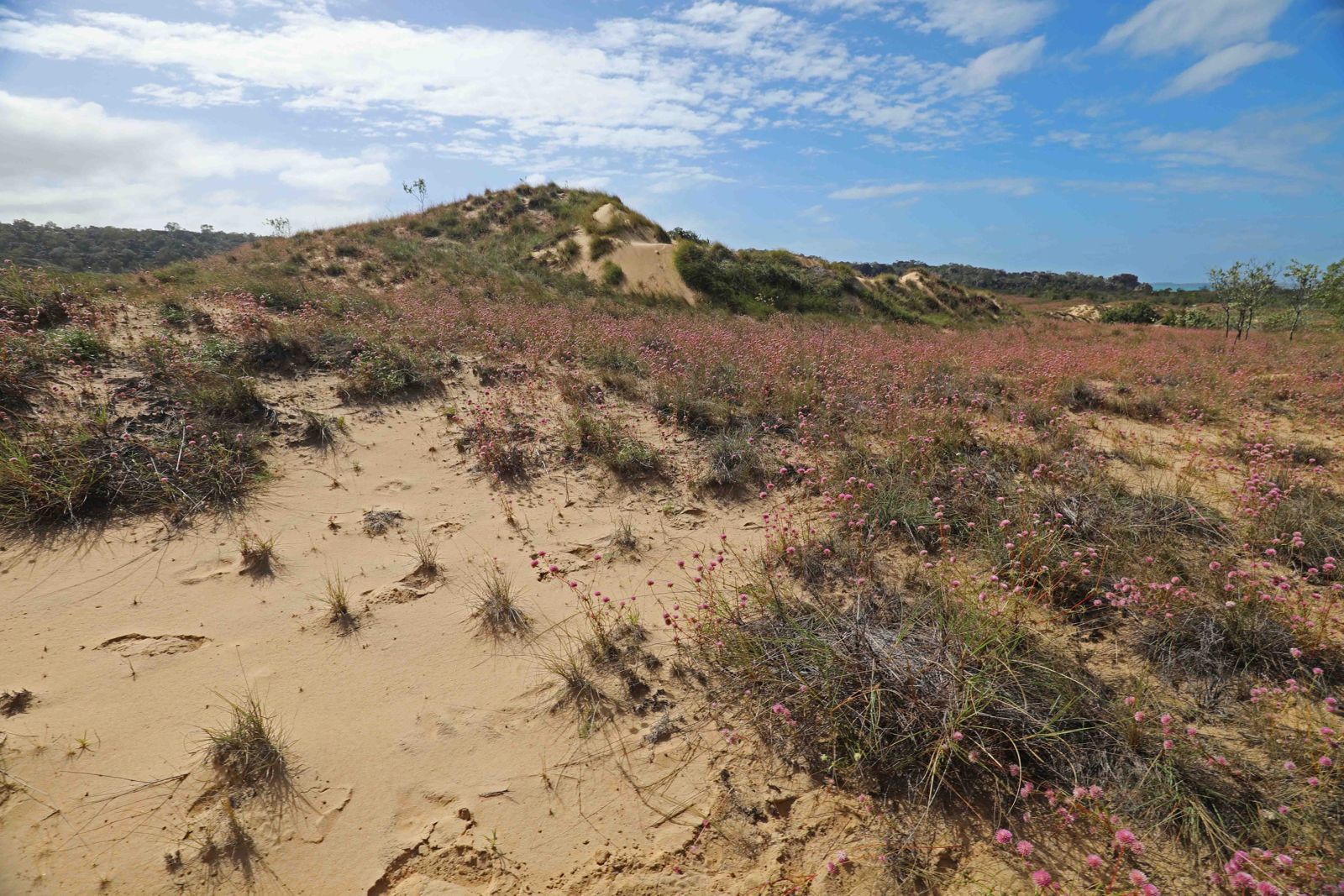
Groote Eylandt — Australia's third-largest island — rises from the turquoise waters of the Gulf of Carpentaria offering some of the most pristine and remote snorkeling in the Northern Territory. The island's fringing reefs, clear dry-season waters, and sandy-bottom bays along the northwest coast near Alyangula provide excellent shore-entry snorkeling. The Anindilyakwa-owned archipelago is a marine wilderness with hard and soft coral gardens, bommies, and drop-offs teeming with tropical fish. Snorkelers can explore the calm inshore waters around rocky headlands and sandy coves, with visibility often exceeding 10 metres during the dry season (May–October).
Groote Eylandt (snorkeling/diving areas)
BeginnerGO
GO
It's a go.
Showing last known conditions
Wave Height 0.1 mSwell Period 3.9 sWind Speed 5.2 knPrecipitation 7.0 mmTidal Phase unknown
Last evaluated
DANGER: Explicit Risks Present
Groote Eylandt (snorkeling/diving areas) has hazards marked as danger. Entering the water here means you may face serious risks to your personal safety.
- Saltwater Crocodiles danger
Saltwater crocodiles inhabit the Gulf of Carpentaria coastline and may be present in inshore waters, especially near mangrove-lined shores and river mouths. Always seek local advice before entering the water.
- Box jellyfish danger
Box jellyfish (Chironex fleckeri) and other stinging jellyfish are prevalent in the warm Gulf waters during the summer wet season.
The spot
Community-maintained
Community contribution: submitted by Daniel
Know before you go
Logged by the community, confirmed by mods
High risk: Saltwater Crocodiles
Saltwater crocodiles inhabit the Gulf of Carpentaria coastline and may be present in inshore waters, especially near mangrove-lined shores and river mouths. Always seek local advice before entering the water.
High risk: Box jellyfish
Box jellyfish (Chironex fleckeri) and other stinging jellyfish are prevalent in the warm Gulf waters during the summer wet season.
Moderate risk: Stinger Season (Box Jellyfish)
Stinging jellyfish (including box jellyfish and Irukandji) are present in the Gulf of Carpentaria waters during the tropical summer wet season. Snorkeling is safest during the dry season.
Moderate risk: Cyclone Season / Storms
Tropical summer storms and cyclones (November–April) can create dangerous sea conditions and poor visibility. Snorkeling is strongly advised only during the dry season.
Moderate risk: Remote location
Remote location with limited medical facilities. The nearest hospital is in Alyangula with limited emergency services.
Low risk: Remote Location / Limited Medical Access
Remote location with limited medical facilities. Alyangula has a small clinic, but serious emergencies require evacuation to Darwin. Snorkelers should exercise caution and never snorkel alone.
Low risk: Box jellyfish & irukandji
Box jellyfish and irukandji are present in tropical NT waters during the warmer months, posing a serious sting risk.
Low risk: Tidal currents
Tidal currents in the Gulf of Carpentaria can be strong, especially around headlands and reef passes.
Low risk: Remoteness & limited facilities
Remote location with limited medical facilities and no lifeguard patrols requires self-sufficiency.
Wildlife Guide
No wildlife notes for this spot yet.
Gallery
1 photo from the community
Getting in
Shore entry
Entry
Groote Eylandt is located 630 km east of Darwin in the Gulf of Carpentaria. Access is by flight from Darwin (1.5 hr) or Nhulunbuy (40 min) to Alyangula. A mandatory permit from the Anindilyakwa Land Council is required to visit. The main snorkeling areas are accessible from beaches around Alyangula Township and the surrounding coastline.
Parking & facilities
Limited parking available near beach access points in Alyangula township. No dedicated snorkeling parking lots — use roadside parking near beaches and tracks. Facilities are limited to those available in Alyangula.
Free access after obtaining a mandatory Anindilyakwa Land Council permit. Permit fees may apply — contact the Land Council for current rates.
Spot Map
Community
Gallery ┬╖ 1 photos
Trust
Is this spot real, accurate, still loved?
Spots near Northern Territory
No nearby spots yet.
Needs verification
Quick verify
One tap helps the community keep this spot honest.
About this data
- Conditions last evaluated
- Spot data last updated
- Data sources
- Open-Meteo (marine & weather conditions), tide predictions via UTide, community contributors (descriptions, hazards, marine life).
- License
- Spot content licensed under CC BY-SA 4.0. How's the Spot is open source.
Weather & swell ┬╖ Open-Meteo marine & weather APIs Tides ┬╖ UTide harmonic analysis Sea & safety ┬╖ community reports