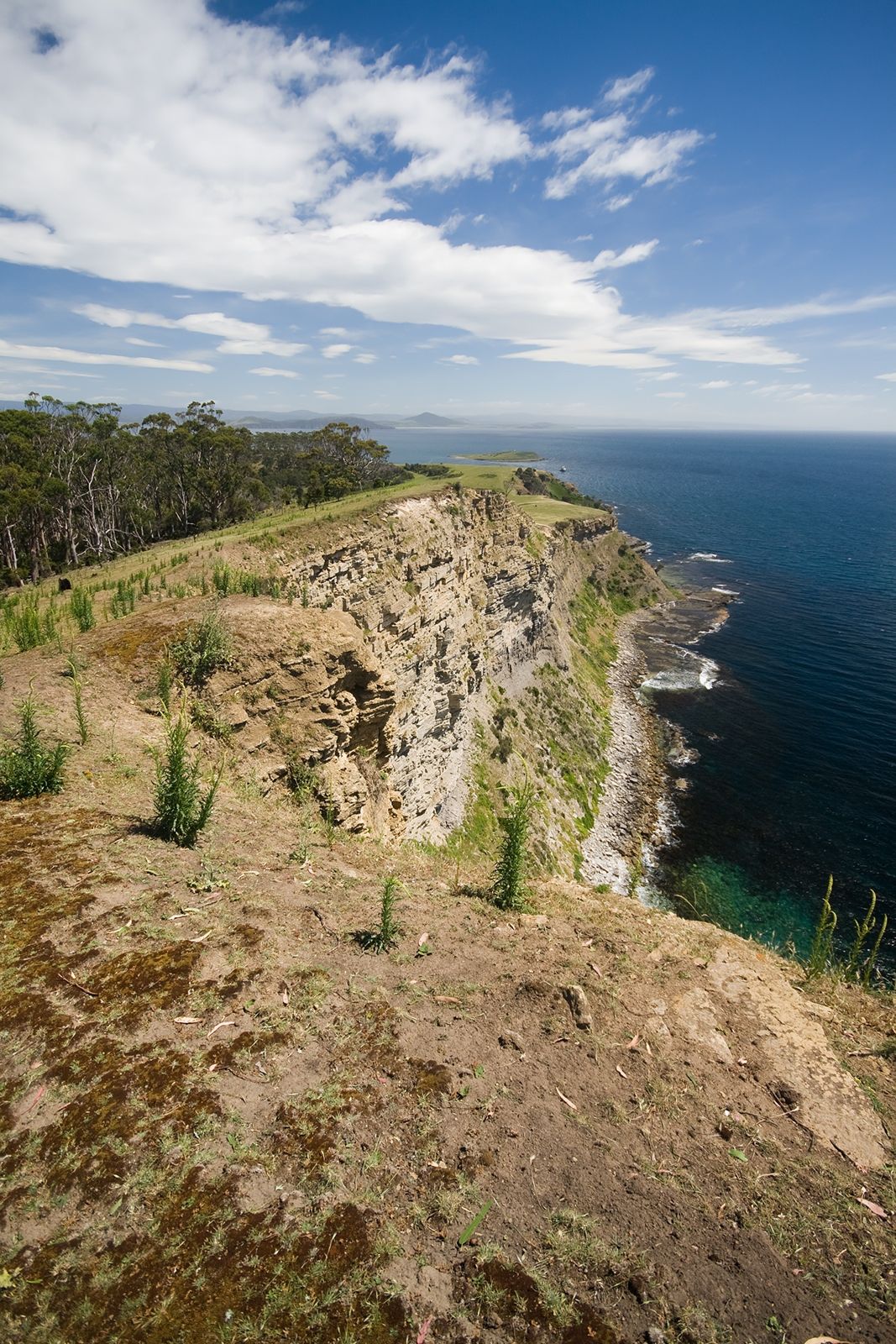
Fossil Cliffs on Maria Island's eastern shore is a spectacular snorkeling destination where ancient Tasmanian geology meets vibrant marine life. The cliffs are composed of richly fossiliferous sedimentary rock from the Permian era, literally layered with marine fossils visible both above and below the waterline. The sheltered coves at the base of the cliffs offer clear, cool waters with rocky reef habitat teeming with temperate reef fish, abalone, and crayfish. Snorkelers drift over boulder fields and along vertical rock walls encrusted with kelp, sponges, and colourful ascidians, with exceptional underwater visibility on calm days. This site combines extraordinary geological interest with pristine marine park protection.
Fossil Cliffs Snorkeling Area
IntermediateGO
GO
It's a go.
Showing last known conditions
Wave Height 0.6 mSwell Period 4.3 sWind Speed 0.9 knPrecipitation 0.6 mmTidal Phase slack
Last evaluated
The spot
Community-maintained
Community contribution: submitted by Daniel
Know before you go
Logged by the community, confirmed by mods
Moderate risk: Unstable cliff edges
The cliff top is unfenced with loose, crumbly limestone rock — a fall hazard for those approaching the edge.
Moderate risk: Strong currents & swell
The northern coastline is exposed to the Tasman Sea, and conditions can produce strong currents and sudden swell changes, especially near underwater caverns.
Moderate risk: Limited emergency access
Maria Island is a remote island accessible only by ferry — medical evacuation is not immediate, and there are no on-site facilities.
Moderate risk: Cold water temperature
Water temperatures in the 12-16°C range year-round. Cold exposure can lead to rapid fatigue and reduced dexterity. A full 5mm wetsuit, hood, and booties are essential even in summer.
Low risk: Muddy/slippery track
The walking track to the cliffs can become very muddy and slippery after rainfall, making the descent hazardous.
Low risk: Uneven limestone terrain
Loose rocks and uneven surfaces at the cliff base and along the shore require careful footing.
Low risk: Cold water temperatures
Tasman Sea waters remain cold year-round (11–17°C), increasing the risk of hypothermia without proper wetsuit protection.
Low risk: Swell and wind chop
The east coast of Maria Island can experience strong southerly swells and sudden wind shifts that create challenging conditions and strong surge along the cliff base.
Low risk: Remote location
Like much of Tasmania's east coast, bull shark sightings, though rare, have been recorded in the area. Remoteness means limited emergency assistance.
Wildlife Guide
No wildlife notes for this spot yet.
Gallery
2 photos from the community
Getting in
Boat
Entry
Access is via Maria Island. Take the ferry from Triabunna to Darlington (30 min). From Darlington, walk or cycle ~10 km south along the island's main track to the Fossil Cliffs area on the eastern side of Maria Island. The snorkeling area itself is reached from shore at Fossil Cliffs.
Parking & facilities
Park at the Triabunna ferry terminal (paid parking available). No vehicle access on Maria Island itself.
toilets
Ferry fee applies (approx $40-50 return per adult). No entry fee for Maria Island National Park.
Spot Map
Community
Gallery ┬╖ 2 photos
Trust
Is this spot real, accurate, still loved?
Spots near Tasmania

No nearby spots yet.
Needs verification
Quick verify
One tap helps the community keep this spot honest.
About this data
- Conditions last evaluated
- Spot data last updated
- Data sources
- Open-Meteo (marine & weather conditions), tide predictions via UTide, community contributors (descriptions, hazards, marine life).
- License
- Spot content licensed under CC BY-SA 4.0. How's the Spot is open source.
Weather & swell ┬╖ Open-Meteo marine & weather APIs Tides ┬╖ UTide harmonic analysis Sea & safety ┬╖ community reports