Known locally as 'The Aquarium', this calm coral-filled lagoon sits just one kilometre south of the famous Quobba Blowholes, about 75 km north of Carnarvon. Protected from the open ocean by a rocky reef, the lagoon offers clear, shallow waters over a sand-and-coral bottom teeming with colourful reef fish, shells, and coral formations. A white sandy beach fringes the lagoon, making it a perfect family-friendly snorkelling spot where even beginners can float safely while watching the marine life below. The adjacent blowholes explode spectacularly during high swell, sending plumes of seawater up to 20 metres into the air.
Blowholes Lagoon / Point Quobba
BeginnerMAYBE
MAYBE
Fair. Experienced snorkellers only.
Showing last known conditions
Wave Height 1.2 mSwell Period 11 sWind Speed 1.4 knPrecipitation 0.6 mmTidal Phase flood
Last evaluated
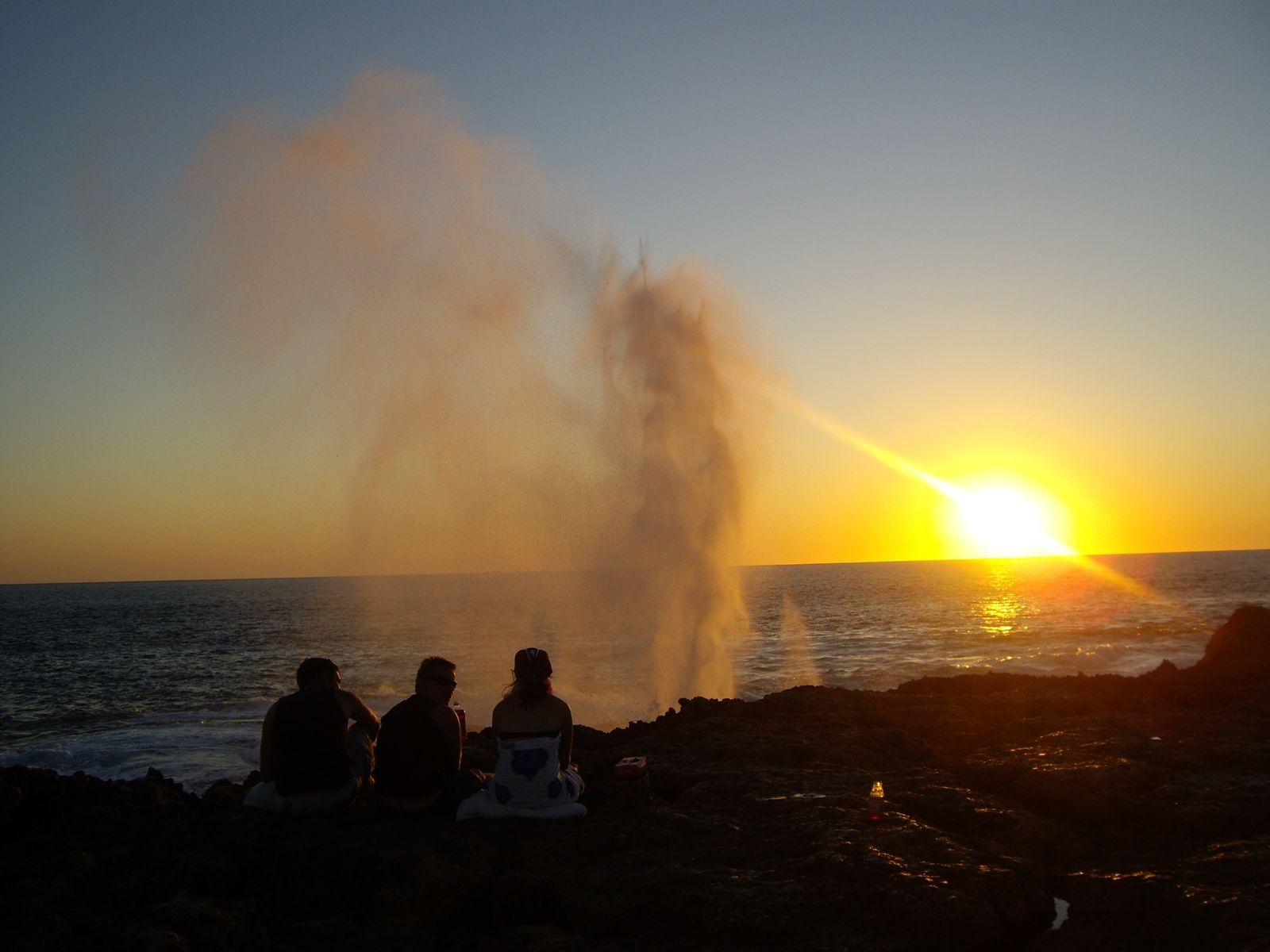 © Travel & Shit from Brighton, UK
The spot
Community-maintained
Community contribution: submitted by Daniel
Know before you go
Logged by the community, confirmed by mods
Moderate risk: Marine Stingers
Box jellyfish and other marine stingers may be present in warmer months along the Coral Coast.
Moderate risk: King Waves
Surging waves can sweep across exposed rock ledges, especially on the ocean side of the lagoon. Exercise caution near the outer reef edge.
Moderate risk: Rough swell at blowholes
The blowholes area (not the lagoon itself) has powerful wave action and sudden water jets that can cause injury. Stay on the marked viewing platforms.
Moderate risk: Surging swell at blowholes
Powerful ocean swells create unpredictable water surges and waves up to 20 m at the blowhole rock formations. Stay well clear of the holes during rough conditions.
Moderate risk: Blowhole Surf Spray & Slippery Rocks
The blowhole area has wet, jagged limestone rocks that become extremely slippery. Sudden large waves can surge through fissures with little warning.
Moderate risk: Swell surge at lagoon entrance
During ocean swells, surge can push snorkelers toward the reef edge at the lagoon's open side.
Low risk: Low Tide Shallowness
The lagoon is best enjoyed at high tide; at low tide water levels drop significantly, reducing swim room and marine life visibility.
Low risk: Summer Swell / Cyclones
During summer, swell and occasional cyclone activity can affect water conditions; best visited when seas are calm.
Low risk: Strong current at high tide
High tide can bring strong currents through the lagoon entrance, making conditions challenging for weak swimmers.
Low risk: Sharp coral and rocks
Shallow areas contain coral formations and rocks that can cause cuts if stepped on.
Low risk: Tide-dependent Access
The lagoon is best snorkelled at high tide. At low tide the water can become very shallow over coral, making swimming difficult and increasing risk of coral contact.
Low risk: Surging tide currents
The lagoon entrance can develop currents during tidal changes, especially when the swell is high. Best snorkelled at low tide when the lagoon is calmest.
Low risk: Remote location and extreme heat
Limited facilities, no mobile reception, and extreme summer heat from November to March. Bring ample water, food, sun protection, and a first-aid kit.
Low risk: Slippery rocks
The limestone rock platforms around the blowholes become extremely slippery when wet, posing a serious slip-and-fall risk.
Low risk: Remote location / limited services
The site is a 75 km drive from Carnarvon with no shops or fuel. Bring ample food, drinking water, sun protection, and a first-aid kit.
Low risk: Strong sun exposure
Minimal shade exists at both the blowholes and the lagoon. Intense UV exposure year-round in this arid coastal region.
Low risk: Shifting Wind & Swell
Strong southerly winds can whip up chop inside the lagoon and increase swell around the outer reef, reducing visibility.
Low risk: Marine Stingers (Nov-Apr)
Box jellyfish and other stingers may be present during warmer months, particularly November to April.
Low risk: Shallow water at low tide
The lagoon is very shallow, making swimming difficult at low tide. Best visited around high tide for comfortable snorkelling.
Low risk: Strong onshore winds (Oct–Mar)
The exposed coast often experiences strong southerly winds, particularly between October and March, which can reduce visibility and make entry choppy.
Low risk: Rocks and reef edges
Sharp limestone reef edges border the lagoon entrance. Wear reef shoes and watch your footing.
Wildlife Guide
No wildlife notes for this spot yet.
Gallery
2 photos from the community
Getting in
Shore entry
Entry
Drive 75 km north of Carnarvon on the sealed Blowholes Road (turn off North West Coastal Highway). Follow the road to the Point Quobba/Blowholes carpark. The lagoon is 1 km south of the main blowholes lookout, accessible via a short walk or drive.
Parking & facilities
Unsealed carpark at the blowholes area and another near the lagoon. Parking is free.
toiletspicnic_tables
Free entry. No booking required.
Spot Map
Community
Gallery ┬╖ 2 photos
Trust
Is this spot real, accurate, still loved?
Spots near Western Australia

No nearby spots yet.
Needs verification
Quick verify
One tap helps the community keep this spot honest.
About this data
- Conditions last evaluated
- Spot data last updated
- Data sources
- Open-Meteo (marine & weather conditions), tide predictions via UTide, community contributors (descriptions, hazards, marine life).
- License
- Spot content licensed under CC BY-SA 4.0. How's the Spot is open source.
Weather & swell ┬╖ Open-Meteo marine & weather APIs Tides ┬╖ UTide harmonic analysis Sea & safety ┬╖ community reports